Cards and Trees

I love Christmas and the many traditions surrounding this season. Cognizant that, for many, the stretch from Thanksgiving through New Year’s is a time of stress and challenge, I am consciously grateful for a history and experiences that allow me to embrace this time. I am also painfully aware of those families who lost so much in recent California fires.

Christmas in the Glass household officially begins on December 1st (never before) with the rediscovery of music collected over the years and the unpacking of Spode Christmas china, first gifted to us as newlyweds by a wonderful aunt. Both collections have grown steadily over the years. The former reflects diverse tastes and some humor; the latter now includes unique pieces that are an extension of a generous basic set. In Jackson Hole for this particular Christmas, I elected not to pack the china. Blessings on the daughters of the aforementioned aunt who bequeathed us a set of demitasse cups. We are not completely Spode-less (there must be a pun lurking their somewhere, but I can’t think of it). As for music, thanks to Spotify and Pandora, I have been able to create an ever-increasing play list (now numbering over 250 songs) without carting or changing a single CD. I start with John Denver and The Muppets and move, in no particular order, to Barbra Streisand, Home Free, Pentatonix, Elvis, Mannheim Steamroller, Celtic Harp, King Singer’s, Anne Murray, Frank Sinatra, Andy Williams and his brothers… Come January 1st, I will have had my fill, but for the month of December, sweet Christmas music evokes precious memories (when Hillary and Allison were much younger, singing Streisand’s “Jingle Bells” with no accompaniment as we drove up River Rd, the sound system in our VW Beatle not working) and embraces new experiences. Music of and from the heart.

For many, paper Christmas cards have become a thing of the past. I appreciate that we are not being as environmentally sound as we could (perhaps should) be, but I am not yet ready to relinquish the tradition that was such an important part of my family history and has been the same for Wayne and me. The one year we decided not to send cards — for reasons I cannot recall — several people confessed later that they figured we must have been getting a divorce. Don’t want to risk that again! 

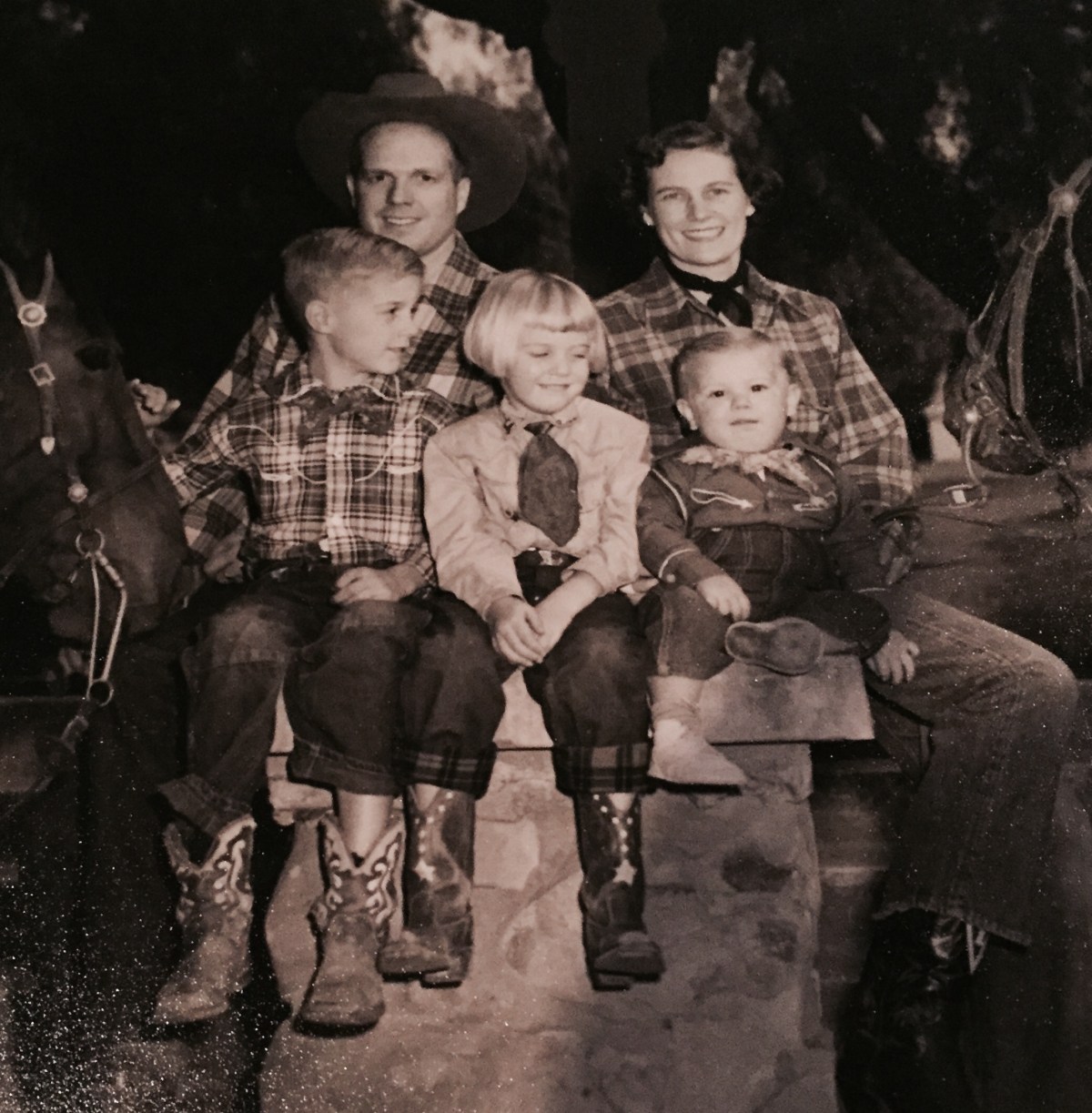
From the time I was a babe-in-arms, my family always sent photo cards. Mom and Dad kept an album devoted just to those family cards. I wish we had done the same. Instead, sometimes I encounter a random year’s photo and am re-amazed at what scene and feeling each picture captured. We send and receive cards from folks who span a shared lifetime, starting with those with whom we shared childhood, moving to high school and college, then to employers, colleagues, and employees. It’s safe to say there are people with whom we exchange annual missives that I haven’t seen in fifty years. However, I recognize their addresses and handwriting before I even open the envelope, and I have a sense of who their children (and now grandchildren) are, and what they are doing. These connections are part of my life’s blood. I value remembering and appreciate being remembered

All that said, I do not love the fact that I just had to reconstruct my entire Christmas card address list (250),which was inadvertently erased as I was trying to update one card. Argh. However, the problem arose after cards had been sent, and technology, culprit at the outset, was my savior. Years ago had I lost my green leather address book, it would have been all over.

Teacher Christmas trees are a species unto themselves, adorned as they are with countless ornaments provided by students and families over the years. In my family, as I am sure is true of other educators’, there are particularly beloved ornaments and decorations without which Christmas just wouldn’t seem like Christmas. Large or small, with identifying tags still attached or not, the small and shining faces of those gift-giving students endure through years and across many moves. 

The first ornament on the Glass family tree is The Pink Pig, given to me by Teddy Fonseca, a round cherub of a child in our JK and K classes at Colorado Academy. My understanding is that, sadly, Teddy passed away as a young adult. His gift has been cherished for over 40 years. It survived intact until our tree fell over in the middle of the night last year and crushed it and one other ornament. Fortunately, I had pictures of The Pig, one of which I printed and laminated and, thus, remains the first ornament to be hung (and is now unbreakable). Two friends found and gave me pink pig ornaments of their own last year, special and meaningful gestures that are worthy of the original Pink Pig. Their generosity suggests how special and meaningful gifts can be, and how the things that we treasure are often small and unexpected. 

My hope is that, whoever you are and whatever you celebrate, you have occasion to reflect on people in your past who somehow remain a part of your present. I hope there is music that fills your heart with  joy and traditions that steady your Life’s journey. I hope that you have associations with young children that brighten your days, even if those “children” are now grandparents themselves.

IMG_6299.jpeg


Thanksgiving “Break”

Throughout the country, hundreds of thousands of educators are preparing for classes tomorrow, following a much-needed Thanksgiving break. I am not one of them. After nearly five full decades as a teacher and administrator, it is on days like this that I fully realize the privileges and pleasures of retirement.

Those who will send their children back to school tomorrow, grateful for the time they have just shared and equally glad to “give them back,” very likely have no idea how much time and thought teachers dedicated over the break. In my experience, Wednesday and Thursday tend to be days of true relaxation. Starting Friday, and certainly moving into Saturday and Sunday, the realities of papers still to grade, lesson plans to prepare, upcoming parent conferences, students of concern, and the relentless curricular calendar begin to loom large. The days between Thanksgiving and Christmas breaks are jammed with festivities (rehearsals, class celebrations, clothing/gift drives), sometimes challenging weather, term exams in many high schools, and report cards (including comments) in increasing numbers. Add to those responsibilities the parents who will elect to keep their children out of school for a couple of extra travel days yet expect teachers to provide work and experience identical to classmates’ who returned on time. Student/Parent Handbooks clearly state that parents (or students themselves, by a certain age) should notify schools at least two weeks in advance, in writing, of planned absences, and that those same schools are not responsible to provide work missed by choice. The problem, of course, is that students are rarely the ones making the choices, and those carefully created handbooks have never been read.

Not all teachers are responsible and caring. Everybody knows that. The very real fact is, however, that the vast majority of educators give more than anyone who has not spent time on the teaching side of a classroom can possibly understand. Believe it or not, they are rarely not thinking of their school responsibilities on some level. Whether it is listening to the news and considering how national and international stories might inform or impact their classroom discussions (Which students, for instance, know someone living close to the California fires or have had a frightening experience with fire? How might the recent fires relate to conversations about climate change?), discovering a new recipe and contemplating the math lessons contained therein, or reading a book or seeing a movie that underscores key themes in a unit of study, a good teachers’ senses are tuned.

For me, it was easy to recognize when a vacation started to end – usually a few days prior to the resumption of classes. It was simply part of embracing the all-encompassing world of being an educator. School thoughts would start edging into my vacation thoughts: things to do, papers to grade, meetings to confirm, parents or colleagues to email. Because it was such a natural part of my life for so long, it was not until this Thanksgiving break, shared with a teacher friend (now a college professor) and her husband, that I recognized just how all-encompassing that pattern used to be.  As she started to obsess about the tremendous load of work ahead of her, I was fully aware that, for the first time in decades, I didn’t have a single similar concern.

For all of you returning to school tomorrow, you have my blessings and a deep debt of gratitude. I know how hard you work and the relentless pressure you put on yourselves to provide the best possible experiences for the students in your classrooms and the athletes on your teams.  For all of you returning your children to school tomorrow, I cannot overstate the level of insight, integrity, patience, intellectualism (yes, including those working in the area of early childhood), and dedication that are quietly provided by teachers on a daily basis – including “breaks.” Never underestimate your own potential to support those teachers by expressing your appreciation for all they do.

Honor Thy (My) Father and Mother

My parents were forces to be reckoned with, individually and collectively. Thirteen years after Mom died and nearly five after Dad followed her, they remain a vibrant part of many lives. Wayne and I are spending the first five months of my retirement in Jackson Hole on our family ranch. I spent every summer on this astounding spot growing up, but visits have been limited to 7-10 days annually for the past forty years. It has been a daily joy to explore our new life in various ways, many through old connections.

When Dad and Mom retired from their boarding school lives, they started spending six months a year here and became very involved members of the community. The name “Huyler” resonates in Jackson Hole. Ruth Glass is a non-entity. Ruth HuylerGlass has history. Wherever we go, if I use my full name when being introduced, the response is immediate and positive:

“You are Jack and Margaret’s daughter? I knew your parents. They were wonderful.”

“Your mother was such a strong and gracious woman. She always made me feel special.”

“Your father always made it very clearly how he felt about everything.”

“We miss your parents and feel blessed to have known them.”

During his retirement years, Dad wrote and published two books about this area: That’s the Way it Was in Jackson’s Holeand Every Full Moon in August.Both Mom and Dad were active in St. John’s Episcopal Church, and Dad faithfully attended Rotary meetings. The women’s book group that Mom co-founded has offered vital discussions for four decades. They leave a legacy that Wayne and I feel is important to honor and to emulate. Many parents today seem reluctant to recognize and insist that there are usually clear lines between right and wrong and that even young children should be held accountable for their choices and actions. My parents were not always right; they were human. However, they both stood firmly for well-established principles. Those who knew them in any context remember them for their honesty and integrity – as well as for their grace and generosity. There was pressure growing up as their daughter, but it was of a do-your-best-and-be-respectful-of-others variety. Some students of my father hated him at the time; most of them came to respect the lessons he taught and the high standards he demanded. Mom, in contrast, was universally loved. Though outsiders didn’t always understand the bonds that kept them together in a vital relationship for over 60 years, there was no question that their partnership was inspiring.


Frequently people ask if it’s weird (one even used the word “creepy”) to live in the cabin where my parents resided; to sleep in the same bedroom where they spent such happy years and where my mother died; to look at the ceiling that is covered with hundreds of framed photographs of family members and activities that my father installed when Mom’s Parkinson’s made it hard for her to get out of bed; to share the space where my grandparents lived before them. No. It is glorious. We gather friends around the long dining room table where Mom hosted endless streams of guests (one summer Dad counted an averageof 14 at each meal). During the summer and early fall we served cocktails (good grief, we really are the adults now) and sat in the same rawhide chairs facing the Tetons that have been used for that purpose for longer than I can remember. I prepare meals in the kitchen where my mother did the same. The walk-in pantry shelves display the same red-checked coverings that my grandmother installed.

Our lives have been busy ones. Our careers have taken us across the country and back. We have lived in Japan, Guam, and seven states. Each was an important and loved abode in our journey. We celebrated our independence and the course of creating our own lives. Now, however, it’s time to come home.

It is easy to imagine – to feel the presence of — Mom and Dad, Grandma and Grandpa, Aunt Manie and Aunt Alice, my brothers and I when we were little, our daughters when they were tots. A doorway in one of the cabins registers the rising pencil lines and dates from each summer when our heights were measured as children – and those of our own daughters and now our granddaughter. We are living surrounded by history, enveloped in the scents and sounds of the river and the aspens, the coyotes and the geese, the bugling elk, the slamming of the porch screen door, and the crackling of the living room fire.

I try to express gratitude every day (another lesson from my parents) and to be aware of the many ways my life has been blessed. This week, especially, I am thankful for a family whose legacy it is easy and essential to honor.


50 Years!

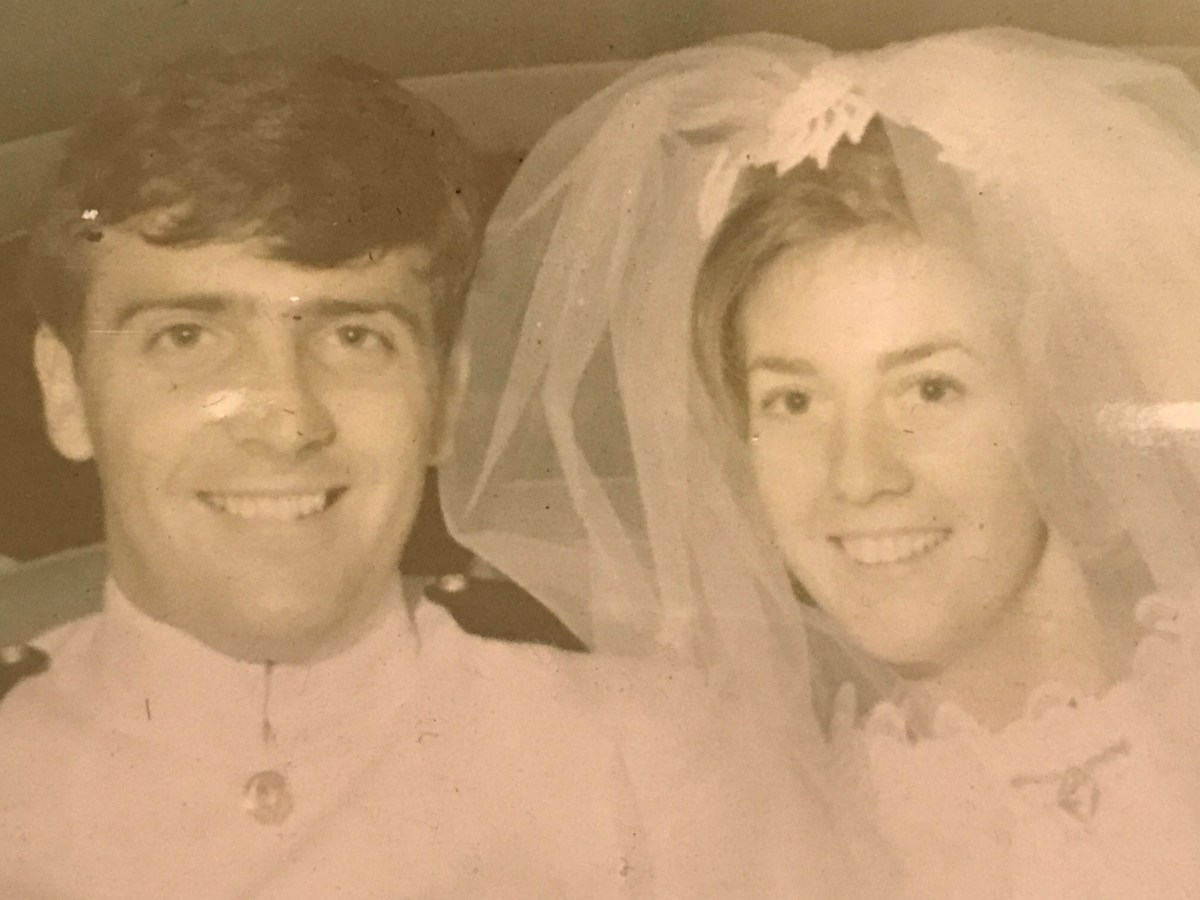
Fifty years ago, on November 2, 2018, a young woman of 20 and a young man just 23 were married in the outdoor chapel of The Thacher School in Ojai, California. Today that no-longer-young couple celebrates our 50thanniversary in Maui. What an amazing journey it has been. The service itself was “mixed,” meaning a combination of Catholic (Wayne) and Presbyterian (me). We had to get special dispensation from Cardinal McIntyre to be married at Thacher. It was imperative that the priest preside over the exchange of vows. We had already memorized our vows when we met him. He told us we could not use them. The Episcopalian words that my parents had memorized and used 26 years prior and that were our choice were identical to the Catholic vows, except that the vows we intended to exchange included “to love and to cherish ‘till death do us part.” There was a moment when Wayne, indirectly but firmly, made it clear that we would welcome the priest’s attendance, but only if he allowed us to include that “bit” about loving and cherishing. I look back and consider that perhaps we were more mature and wise than our ages would have suggested.

There are those who say we are an inspiration. What a compliment. As “youngsters,” I suspect we looked at people when they celebrated their big anniversaries and thought (1) they were kind of old and (2) it must have been easy for them. From the “lofty” advantage of sitting on the golden balcony, I can say with utmost confidence that (1) I don’t feel old (despite the fact that I recognize I am no longer young), and (2) nothing is always easy over a 50-year period.

We have all been inspired by others whose own challenges were never obvious. About 25 years ago, three couples we knew well in our church split up. While the reasons for each were valid and unrelated, I recall the wife of one older couple, a partnership we considered inspirational and of “pillar” variety, urged the couples to stay together, that every marriage goes through times of real challenge. At the time, we were shocked to realize that this seemingly perfect couple apparently had experienced their own struggles.

It is impossible to observe or understand the interior of any marriage. One couple we met this morning, celebrating their 30th, noted that everyone they knew had predicted they would never last. Apparently they were introduced and then married very quickly in their 20s. We all know couples that seem perfectly matched but don’t go the distance. While I could list any number of elements that have kept us together for 50 years, I credit four as being critical: our circle of family and friends, the fact that neither of us gives up easily, a shared sense of humor, and luck.

Starting with the last, it has always seemed to me that the two of us, though hardly fully formed at 20 and 23, are pretty much the same people that we were when we got married. I consider it lucky that our lives have generally continued along relatively predictable lines. Neither of us has undergone a radical personality, political, or health change. In many ways we remain married to the same person who attracted us in the first place. On our 10thanniversary, Wayne asked us both to consider how each of us had most impacted the other. We agreed – having come to the conclusion independently – that he had helped me to develop more confidence in myself and that I had helped him to be less moody and more positive about things in general. Both improvements strengthened our relationship.

We have been extraordinarily blessed to share life’s journey with exceptional people. Starting with our college friends and family members and expanding to those with whom we formed relationships in our professional/sports/personal lives. We have been members of remarkable church communities that took seriously and proactively the work of social justice. We have always tended to like the same people, and it has been a gift to share enduring friendships with many other couples. Each of us has also created special bonds with individuals. There are those who have found their ways into my life at times of crises of self-confidence and helped me step back and gain better perspective. I am sure the same is true for Wayne.

Both of us were athletes (I hate saying we are former athletes…) and good students.  The latter was probably more natural for Wayne than I; I worked hard and came into my own in school later than he. There is nothing like dropping out of college after one’s sophomore year and graduating seven years later with one toddler and one newborn to focus one’s attention and hone one’s academic skills! We played on numerous sports teams together. We always valued teamwork and how critical it was never to throw in the towel just because a game wasn’t going right. In fact, one of my favorite sports moments (retrospectively) came when I was playing for The Hot Flashes, an over-30 women’s soccer team on which I played for 13 years/26 seasons. I loved the team and the game and was generally considered a strong, not flashy, player.  Different coaches played me in different positions, which always kind of puzzled me but is a reminder that perceptions vary. One Saturday I was not playing well, for inexplicable reasons. Our coach, Corky Logsdon, pulled me, walked me away from the bench, put his arm around my shoulders, and said, “Ruthie, what’s wrong. You’re playing like shit!” I burst into tears and said I had no idea. He kept me out a few minutes longer then put me back in, where (I think…) I played better. I have been fortunate to have a lot of Corkys in my life. People who believe in me, talk me through the tough moments, and generously put me back in the game.

As for that final gift, I cannot imagine getting through life, much less a long marriage, without a sense of humor. Wayne and I still make each other laugh, still know how to locate the other’s funny bone, still look for the humor in even difficult moments. We happen to share a great many interests, though we also have separate passions. We’ve always tried to respect each other’s work and allegiances. Frankly, there are also things we don’t talk about. Works for us.

My latest metaphor about marriage is that it’s somewhat like losing one’s wallet on a big trip, which I did earlier this week on our way to Hawaii. In it were my driver’s license, a couple of credit cards, and some cash. I discovered it was missing halfway between Incline Village and Sacramento. The immediate question, of course, was whether or not I could get through security at the airport. We talked about turning around. No time. We decided that, if I were stopped, Wayne would go on, and then I would head back to Incline and retrace my steps. At no time did we consider bailing or that it was essential (though certainly preferable) to travel together. We knew we could figure out something.

Fortunately, I had my Sam’s and Costco cards – both with photos— and a checkbook showing our address. While my carry-on luggage and my person were checked quite thoroughly, the TSA agents were professional, courteous, and helpful. We joked about other passengers dressed in costume for Halloween, and they let me through. I was grateful that they did their jobs with compassion.  Meanwhile, Wayne had zipped through TSA Pre and headed to the gate, not knowing if I would join him or not. Sometimes Life is unpredictable. When we arrived in Maui, I couldn’t pick up the rental car. We adjusted. And the humor of the situation was not lost on us, given that Wayne had left his wallet at a gas station in Tucson just two weeks ago. (Maybe we aregetting old!) The fact is, our trip didn’t start quite like we planned, but we readjusted, created some alternate strategies, kept our cool, were helped by strangers, and had faith that it would all work out. It has, including the fact that both wallets were found and returned.

If the above metaphor doesn’t work for you, let me try hair… Mine has never been predictable; it’s never been the long, flowing, glowing, straight locks that are written about in novels, cast in movies, and certainly the preferred style for most women. I used to worry about it, throw my hairbrush when unruly curls sprang stubbornly through the strongest hairspray (much to my young husband’s shock), and even ironed it at one (silly) stage of my life. For too long I tried to look like someone I would never be. Marriage can be that way. Whether we know it or not, we all have expectations about what one is “supposed” to look like. Somewhere along the way, I learned to embrace my hair as it was (except for the graying part), just as I grew to recognize that what makes our marriage strong is that we are our own selves, not trying to be like anybody else. A perfect picture we will never be. I like to think we are more interesting.

What I know is this: life is too short to panic, to be acrimonious, to be too judgmental, or to lose one’s sense of humor.  It is never too long to forget to be grateful or to stop and appreciate the beauty of the journey. 50 years can pass in a blink.


Music to my Ears

In 2001, we moved from Bethesda, Maryland, to Pacific Palisades, California, for me to head a small proprietary school for children with special needs and their siblings. The school was tiny, the students and their families appreciative and delightful, and the faculty young and very dedicated. Though the challenges were many, I loved my job and the people with whom I worked. I was delighted to be back in California, not too far from where I was raised. We were able to see my aging parents frequently. Life was good, but I missed interacting with women of my generation.

After having settled in for about a year, I was invited to join a book club. At that point, the group had been in existence for twenty-five years. Sixteen years later, I may still be the newest member — and we have been at Lake Tahoe for seven years. I vividly remember my first meeting. It was summer. The home where we met had a (normally) quiet back yard. As the friend who had invited me and I made our way through the house, I could hear the babble of women’s voices, raised in laughing familiarity. Even before I had been introduced to anyone, I was stunned by how much I was moved by their voices and how much I had missed my women friends. The sound they made was music to my ears.

In the ensuing years, I became a committed member of the group. We were (are) a diverse crew. While there are those whose social lives intertwine outside of the monthly gatherings, it’s fair to say that most of the women see each other only at book club. Their connections, however, are so much more. The fact that I still consider myself a member of this book club attests to the integrity of the women involved. We read a wide range of authors and topics. Discussions are frequently lively and sometimes exceptional. One evening, as we finished thoughtful reflections on Still Alice, one of our group shared that the book did an excellent job of portraying what life was like for her family and her younger sister, who had recently been diagnosed with Early Onset Alzheimer’s. In fact, I can recall no gathering where we didn’t take time to touch base in terms of those present and those not. If one suffers, we all feel it. In fact, the formal part of each meeting generally begins with a few minutes dedicated to joys and concerns, as it were. We range in age from somewhere in the 60s to 87. Surgeries, divorces, the loss of family members, health and job challenges for children (and grandchildren) are a part of our collective lives. So are births, travel, retirement, and whole new experiences.

Last week I had the pleasure of attending my first book club meeting in over seven years with what is ostensibly the same group of women who welcomed me in 2002. Tahoe and Southern California are a wee bit distant for weeknight attendance, though retirement may make that distance quite surmountable. We had read Improvement, which none of us loved, a couple heartily disliked, and most of us agreed was hard to follow. All of which made for a terrific, rowdy, thoughtful discussion (the books we all love often don’t engender much memorable discourse, actually). Disagreements were cheerfully fierce. No one minced words if she disliked a character. Initially rejecting the critics’praises, we ultimately had to admit that, if we could get so hot and bothered about a fictional person’s choices, the book must have been better written that we initially gave it credit. We all left feeling fulfilled intellectually and emotionally,

There were moments that evening when it was hard to hear who was saying what. I am sure that to anyone uninvolved and trying to listen, the room was more cacophony than symphony. Women can get a bad rap for the amount they talk and the volume and pitch at which they do so. Sometimes it takes careful listening to hear the complicated harmonies and the intricate chords, the caring and the sharing, the empathy and the support. Last week, after such a long abscence, I heard very special music.

Wise and Wonderful Women

A little over a year ago, I decided that the best way to celebrate turning 70 and retiring after forty-six years in education was to invite a slew of friends to a week on our ranch in Jackson Hole. I had considered a white water river trip, always appealing to me, but figured committing time and money so far in advance would be problematic for many of my guests. A week during which women could come and go at their convenience suited all.

Twenty-three were invited (we would have been cozy, but it was doable). Ultimately, fourteen of us gathered, ranging in age from three and one-half (granddaughters are young but surprisingly wise little women) to seventy-one. The group consisted of our two daughters; three cousins I had known since shortly after birth; church friends we met forty-eight years ago in Washington, DC; women I worked with in schools across the country; one sister-in-law. Politically and professionally, we were a somewhat diverse group with one thing in common: me. By the end of the week, new connections had been made, friendships formed, bonds recognized and celebrated. During a week in which the nation struggled with the continued perception among many that the truth of women is not to be recognized, and that we remain, unbelievably, the “weaker” sex, we on the ranch experienced precisely the opposite.

The strengths, insights, and experiences shared by my friends continue to impress, deeply, long after their departure. Among us are a few who have been divorced, some who have been married for nearly half a century, some who have remarried, some who are single. Almost all have children, with a generous sprinkling of grandchildren. Given our average age, it is not surprising that many are experiencing the kind of trials that we always thought belonged to our parents’ generation: deaths of family members and friends, surgeries, job losses, crises for some of our children, health scares, financial challenges. The women in each of those families have quietly shouldered the burdens of their loved ones, not necessarily without male support, but with constancy and steadfast reassurance. Some have been deeply wounded in the process, yet that pain is kept close so as not to inflict further worries on others. It was within the group of strangers-becoming-friends that each, in her own way, felt safe to share. One of the blessings of the week turned out to be the opportunity for those who have dealt with some pretty significant stuff this year to put The Real World aside. It turns out that my very selfish desire for a week with dear friends served as a gift for many of them. What a blessing for us all.

While we experienced and delighted in much that Jackson Hole has to offer (hikes, National Wildlife Art Museum, historical Chapel of Transfiguration, hikes to Phelps Lake and from Jenny Lake to String Lake, Dornan’s, last Farmers’ Market of the season, a day trip to Yellowstone, walks along the Snake River), it was the gatherings over breakfast or dinner, around the campfire, or in the living room of this historical cabin that were most memorable. There is much of a graceful dance involved in numerous women sharing a space. Friends, frequently duos who had never met before, took turns preparing meals. We fell naturally into teams, mixing and matching spontaneously. We ate wonderfully and way too much. (Who am I to refuse a homemade plum torte? Anyone who knows me would laugh at the notion.) Everyone took a turn at cleaning up. When I drifted into the kitchen late each night to set up coffee for the following morning (three coffee pots started each day), it was always to discover everything had been washed and put away and the kitchen left spotless.

I know each of us had been anticipating last week with pleasure and that those who were unable to attend were disappointed. I believe each who was here left with a deeper sense of herself, of her role in the world, and of her great value to others. I hope that each was reminded of her very real strengths: her wisdom; her willingness to listen and to share her own experiences when they can offer solace; her deep well of laughter; her appreciation for the beauty in her surroundings, wherever they are; her openness to new experiences and people. We each struggle with our own demons, small or large. My wish for every woman – and for every man – is the constancy of friends who endure over the years. We all need those who will be honest with us, not just placatory; who will hold us accountable and not make excuses for us; who will rejoice in life’s celebrations and hold our hands when we weep; who will laugh deeply and make us do the same. The first Wise and Wonderful Women’s Wild Wyoming Week (we weren’t actually wild at all…) was not just a “retreat.” It was an advance. It will not be the last.

‘Tis a Gift to be Simple

For as long as I can remember, I have frequently thought in song titles. One memorable year (for me, anyway), every email I sent to faculty bore a song title in the Subject line. Given that I never repeated a heading, it certainly made finding old email topics easier.

For nearly two months now, my husband and I have been on our family ranch in Jackson Hole, where life is decidedly simpler in many ways. This retirement thing means no more arising at 5:00 am every morning, unless I want to. Haven’t wanted to so far. I sit at the front window of our cabin (built in the 1930s) each morning, lingering over coffee and journal, glancing up periodically to check if there are horses, deer, elk, or bald eagles in sight. We usually don’t bother having breakfast until we’ve been up for a few hours, and then I frequently get experimental and crafty (egg cups with vegetables nested in Canadian bacon; baked portabello mushrooms stuffed with sausage and veggies, topped with fried eggs, for example). I hike and wander up the dike along the Snake River, which borders our ranch. I saddle soaped my tack (as well as Mom’s and Dad’s) and am thoroughly enjoying riding again. I used to be really good… For those who know me, it should come as no surprise that I toy with the idea of competing in rodeos again. Farfetched, I know, but I believe the quotation is something to the effect that “(wo)men don’t stop playing games because they grow old; they grow old because they stop playing games.” Truth to tell, there seems to be a bit of both at work here.

We have hosted a family wedding and several overnight and dinner guests. I am, it appears, becoming my mother. Dad had a habit of making friends wherever he went, and inviting them to a meal was normal. One memorable summer the averageheadcount at all meals was twelve. We were a family of five. In fact, my parents purchased the very first ranch dishwasher the day I left for college. Literally. It’s possible I could wash them more quickly and effectively than the automation, but the point was made.

In August, I got a library card, my first in probably twenty years. With it comes the luxury of time and the opportunity to check out five or so books at once, read them at my considerable leisure, and return them all well within the three-week time limit. What fun it is to read for pure pleasure and a wide range of genres. In that sense, I am transported back to my childhood, when we were all subject to an enforced quiet time for two hours every afternoon, courtesy of my grandmother’s need to take a nap. The simple gift she gave us in that two hours was the joy of extended reading. My brothers still tease me about reading The Five Little Peppersseries again and again, but that is an exaggeration: It couldn’t have been more than thrice…

For the 70 years that I have been coming to the ranch, we have never had a television. We did add internet a couple of decades ago and, until yesterday, that very same internet connection sufficed. Sort of. Actually, it has driven us all crazy. Confronting that little, rotating “circle of death” on screen after screen, with only emails and Facebook posts from twenty-four hours earlier finally got to me. We went from 1.5bps (I kid you not) to 20bps in the space of a couple of hours. What a miracle! I should admit that we also hooked up a TV, what with long, cold nights approaching. I love this simpler life and appreciate the extraordinary gift of each day. I also love a good movie and the ability to communicate quickly with distant family and friends.

Mom

While there are those who claim they are “self-made,” I contend that no one is successful in life (however “success” is measured), without some significant mentors along the way. I have been blessed with many. And while it will be my pleasure and privilege to talk about some of them over the course of the next weeks and months, today is my mother’s day.

Margaret Noble Appenzeller Huyler was born April 23, 1919 in Korea. She died on September 11, 2005 on our ranch in Jackson Hole, Wyoming. As my beloved mother, she was my first and foremost mentor, the one who, along with Dad, taught me the most basic and long-lasting lessons about right and wrong, treating people with respect and integrity, the value of hard work, honesty, family (heritage and present). A woman of unfailing grace and beauty, she was a quiet but recognized and respected force.

Mom had a wicked sense of humor. Dad could never understand how she and I would get uncontrollable giggles in church or other venues where we were supposed to be serious. The kind of giggles that, perhaps, one shares at that depth only with family. We would laugh so hard the pew would shake. When one of was managing to control herself, the other would set off, silently shaking and initiating another paroxysm of mirth, while Dad looked on disapprovingly.

Mom was a remarkable athlete. Had she been of another era, she likely would have won a full track scholarship to UC Berkeley, where she graduated in 1940, a year ahead of herself. Given that she grew up as the daughter and granddaughter of Methodist missionaries in Korea and graduated in a senior class of five, she had to have been a pretty smart cookie.

Two favorite memories underscore her athleticism and perseverance. When I was about five, we were at the Teton County Fair and Rodeo, where Dad was the announcer. Mom, my brothers, and I were seated in the stands when he announced a 100-yard dash for women and egged Mom to participate. (She was reluctant only because she would have to run in her socks and had a hole in one.) So Mom pulled off her boots and lined up along with fifteen or twenty other competitors, two of whom were Olympic skiers and probably ten years younger than she. Despite the fact that one of the linesman tried to trip her, she won the race – much to the indignation of one of the skiers.

The second, on-going claim to fame was that Mom and Dad were undefeated in the horseback version of the traditional sack race at The Thacher School. The event consisted of partners on separate horses racing 100 yards, piling off their steeds, each inserting one leg in a gunny sack, and running back to the starting line, leading their horses. Mom and Dad worked in perfect synchrony and were beautiful to behold, outstripping all challengers (mostly fit high school boys).

Perhaps these recollections serve as odd examples of what I learned from my mother, but they are significant, and they are what are on my mind on this 13th anniversary of her death. Mom never said no to a challenge. She held her own in any situation with exceptional grace and character. While her life was traditional in many ways, she was also a constant reminder of what women could do – and were not “allowed” to do.  I imagine that all of us make choices and do things in ways that consciously reflect our parents and other loved ones. The Big Things are important: the ways we choose to live and treat people. The Little Things are the ones that inspire memories and are good for the soul. For me – for Mom – they include picking a wildflower and putting it in my hat when I am riding or hiking, setting a nice table, sharing kitchen space, laughing with my daughters, holding my granddaughter, creating a great salad, giggling uncontrollably when I should be straight-faced.

Mom was diagnosed with Parkinson’s seven years before she died. Her last couple of years were a particular challenge for someone who had been so physically capable. At one point not too long before she died, she needed help buttoning her cuffs. She remarked, as I did so, “Oh, Rufis, you make it look so easy.” She never complained, and that single comment struck me deeply in terms of how she dealt with her losses internally.

Here’s to you, Mom. May you be laughing, running, riding with flowers in your hat. Thank you for being my north star.

“One Ambition”

A few weeks ago a childhood friend invited me to join a book group started by her mother and mine in about 1985. Neither of our mothers nor their original book group “sisters,” all mothers-by-extension to the two of us, survives today, but their spirits remain vibrantly alive in the group. It is a special joy to be included in this collection of thoughtful, feisty, got-your-back women.

The invitation for my first gathering, however, was initially a bit daunting. Instead of reading a book, each of us was to select a poem that was meaningful and bring it to be read aloud. Unless I consider selections from Winnie the Pooh and Christopher Robin or songs (poems in their own right) or that which I memorized in 5thgrade (“Daniel Boone, at twenty-one, came with his tomahawk, knife, and gun…”), I am hard-pressed to name a meaningful poem. Too much damage done by teachers of English who, in my opinion, made me analyze poems to death. What to do?

I turned to Garrison Keillor, The Writer’s Almanac, and Googled archives, of course, scrolling backwards from Almanac’slast airing. And there I found it, the perfect poem: “One Ambition”, by Paul Hostovsky, on August 9, 2017. I read it to book group, received an appreciative response, and was inspired to write a bit of a fan letter to the poet. To my happy surprise, he responded quickly, sent me the volume of his poetry that includes “One Ambition,” (entitled Is That What That Is, which I strongly recommend), and gave me permission to include his poem in this blog. Before I do so, let me digress…

When I was about thirteen, I decided to teach myself how to whistle using four fingers (two on each hand). My visionary goal was (still is) to be able to hail a taxi with said whistle when I am eighty and in New York City. One might wonder why a young teenager in a small Southern California town came up with such aspiration. I don’t actually remember that part.

It took long hours of practice, experimentation, and determination to develop the whistle that has served me so well for over fifty years. As a teacher, I could summon my class from recess with one, shrill beckon. My students knew the deal: I would give them the longest amount of play time possible, but there was no mistaking what was my call. Once, on a weekend field trip to the Congressional Cemetery in Washington, DC, I realized that I had not determined a departure point or hour. Inquiring parent chaperones were wondering how we would gather their scattered offspring. Shrugging, I put fingers to mouth, whistled one long summons, and they all ambled back remarkably promptly, much to their parents’ surprise (and my internal delight). Former students have told me they always knew I was in the audience and could hear my “applause,” whether they were on stage or competing in some sports venue. There are simply times when a distinctive whistle is that for which an occasion calls. People are often surprised when it is me who produces one. I get a kick out of that. And I still plan to hail that taxi at eighty, an age that is surprisingly close!

Here is Paul Hostovsky’s marvelous “One Ambition.” It speaks to my heart – and my sense of humor. Equally important, Mr. Hostovsky has inspired me to start reading poetry, for which I am grateful.

All I ever really wanted

Was to whistle with my fingers –


I knew I would never

be the one up on stage


blowing everybody away

with beauty, brilliance, virtuosity…


But to be the lightning

inside the thunderous applause,


to have the audacity

and the manual dexterity


to make a siren screeching

through a dark auditorium,


to be the killer hawk

in all that parroting, pattering rain,


to be, finally, the very best at praise –

now that was something


I thought that if I gave my life to

I might attain.


(FutureCycle Press, 2017)

Roots and Wings

Roots and Wings

‘T’is the season for children everywhere to enroll in colleges and universities, boarding schools and “gap years.” While parents have contended for years that this is their goal, the actual leave- taking frequently is more complicated than we imagined when our children were 13 and we said we could hardly wait until they left…

There was never any doubt that our parents loved my two brother and me, though they were strict task masters. Some folks confuse the two: love and expectations. For Jack and Margaret Huyler, the notion of being their children’s “best friends” never crossed their minds, I am sure. We entered the realm of friendship when we were adults – and, still, they were our parents. My husband and I tried to do the same with our daughters, who are now graceful, responsible, confident adults. They are our equals in every way, and the bonds between us are very close. We remain their parents, a relationship that we share with no one else. Perhaps it was that bond that allowed me to give them the wings to fly when it was time to leave for (daughter #1) gap year then college and (daughter #2), boarding school then college.

It is never easy to say goodbye to our children. We worry about them in ways of which they shouldn’t be aware. One of the most impactful moments of my life was when my older brother left for college. John is three years older than I. He was born two months premature during World War II, when our father was serving in the US Army in China. When John arrived, Mom couldn’t be certain her son would survive or her husband would live to see him if he did. It was not surprising that the two of them formed a very special bond. Actually, Mom had special bonds with each of us. She never favored one over the other; we simply related differently, as one does with one’s offspring.

John matriculated at Princeton University in September of 1963. No one went with him. He boarded a plane in Jackson, Wyoming, while the rest of us gathered at the fence on the tarmac to wave him off. As far as I was aware, Mom and Dad were thrilled for him. The message I received at the same time, probably unspoken, was that it would be my turn next.  At the top of the stairs, John turned for one last wave. Grinning broadly, for some reason I turned to look at Mom, who was waving and smiling in return – while tears rolled down her cheeks. John could not see them. She would not have wanted him to. Even at 15 I recognized she was giving him a gift by keeping her sorrow to herself.

Yes, it was hard to let go of Hillary and Allison. Were it not, that would have been a reflection of something significantly missing. They knew – they know – that I loved them then and love them now. Whatever fears I had on their behalf, I hope I was able to keep to myself. I wanted them to trust in their capabilities and future, not be dependent on us. As my parents did with my brothers and me, I believe that they left imbued with the confidence that they were capable, that their roots were strong and their wings unfolding.