Music to my Ears

In 2001, we moved from Bethesda, Maryland, to Pacific Palisades, California, for me to head a small proprietary school for children with special needs and their siblings. The school was tiny, the students and their families appreciative and delightful, and the faculty young and very dedicated. Though the challenges were many, I loved my job and the people with whom I worked. I was delighted to be back in California, not too far from where I was raised. We were able to see my aging parents frequently. Life was good, but I missed interacting with women of my generation.

After having settled in for about a year, I was invited to join a book club. At that point, the group had been in existence for twenty-five years. Sixteen years later, I may still be the newest member — and we have been at Lake Tahoe for seven years. I vividly remember my first meeting. It was summer. The home where we met had a (normally) quiet back yard. As the friend who had invited me and I made our way through the house, I could hear the babble of women’s voices, raised in laughing familiarity. Even before I had been introduced to anyone, I was stunned by how much I was moved by their voices and how much I had missed my women friends. The sound they made was music to my ears.

In the ensuing years, I became a committed member of the group. We were (are) a diverse crew. While there are those whose social lives intertwine outside of the monthly gatherings, it’s fair to say that most of the women see each other only at book club. Their connections, however, are so much more. The fact that I still consider myself a member of this book club attests to the integrity of the women involved. We read a wide range of authors and topics. Discussions are frequently lively and sometimes exceptional. One evening, as we finished thoughtful reflections on Still Alice, one of our group shared that the book did an excellent job of portraying what life was like for her family and her younger sister, who had recently been diagnosed with Early Onset Alzheimer’s. In fact, I can recall no gathering where we didn’t take time to touch base in terms of those present and those not. If one suffers, we all feel it. In fact, the formal part of each meeting generally begins with a few minutes dedicated to joys and concerns, as it were. We range in age from somewhere in the 60s to 87. Surgeries, divorces, the loss of family members, health and job challenges for children (and grandchildren) are a part of our collective lives. So are births, travel, retirement, and whole new experiences.

Last week I had the pleasure of attending my first book club meeting in over seven years with what is ostensibly the same group of women who welcomed me in 2002. Tahoe and Southern California are a wee bit distant for weeknight attendance, though retirement may make that distance quite surmountable. We had read Improvement, which none of us loved, a couple heartily disliked, and most of us agreed was hard to follow. All of which made for a terrific, rowdy, thoughtful discussion (the books we all love often don’t engender much memorable discourse, actually). Disagreements were cheerfully fierce. No one minced words if she disliked a character. Initially rejecting the critics’praises, we ultimately had to admit that, if we could get so hot and bothered about a fictional person’s choices, the book must have been better written that we initially gave it credit. We all left feeling fulfilled intellectually and emotionally,

There were moments that evening when it was hard to hear who was saying what. I am sure that to anyone uninvolved and trying to listen, the room was more cacophony than symphony. Women can get a bad rap for the amount they talk and the volume and pitch at which they do so. Sometimes it takes careful listening to hear the complicated harmonies and the intricate chords, the caring and the sharing, the empathy and the support. Last week, after such a long abscence, I heard very special music.

Wise and Wonderful Women

A little over a year ago, I decided that the best way to celebrate turning 70 and retiring after forty-six years in education was to invite a slew of friends to a week on our ranch in Jackson Hole. I had considered a white water river trip, always appealing to me, but figured committing time and money so far in advance would be problematic for many of my guests. A week during which women could come and go at their convenience suited all.

Twenty-three were invited (we would have been cozy, but it was doable). Ultimately, fourteen of us gathered, ranging in age from three and one-half (granddaughters are young but surprisingly wise little women) to seventy-one. The group consisted of our two daughters; three cousins I had known since shortly after birth; church friends we met forty-eight years ago in Washington, DC; women I worked with in schools across the country; one sister-in-law. Politically and professionally, we were a somewhat diverse group with one thing in common: me. By the end of the week, new connections had been made, friendships formed, bonds recognized and celebrated. During a week in which the nation struggled with the continued perception among many that the truth of women is not to be recognized, and that we remain, unbelievably, the “weaker” sex, we on the ranch experienced precisely the opposite.

The strengths, insights, and experiences shared by my friends continue to impress, deeply, long after their departure. Among us are a few who have been divorced, some who have been married for nearly half a century, some who have remarried, some who are single. Almost all have children, with a generous sprinkling of grandchildren. Given our average age, it is not surprising that many are experiencing the kind of trials that we always thought belonged to our parents’ generation: deaths of family members and friends, surgeries, job losses, crises for some of our children, health scares, financial challenges. The women in each of those families have quietly shouldered the burdens of their loved ones, not necessarily without male support, but with constancy and steadfast reassurance. Some have been deeply wounded in the process, yet that pain is kept close so as not to inflict further worries on others. It was within the group of strangers-becoming-friends that each, in her own way, felt safe to share. One of the blessings of the week turned out to be the opportunity for those who have dealt with some pretty significant stuff this year to put The Real World aside. It turns out that my very selfish desire for a week with dear friends served as a gift for many of them. What a blessing for us all.

While we experienced and delighted in much that Jackson Hole has to offer (hikes, National Wildlife Art Museum, historical Chapel of Transfiguration, hikes to Phelps Lake and from Jenny Lake to String Lake, Dornan’s, last Farmers’ Market of the season, a day trip to Yellowstone, walks along the Snake River), it was the gatherings over breakfast or dinner, around the campfire, or in the living room of this historical cabin that were most memorable. There is much of a graceful dance involved in numerous women sharing a space. Friends, frequently duos who had never met before, took turns preparing meals. We fell naturally into teams, mixing and matching spontaneously. We ate wonderfully and way too much. (Who am I to refuse a homemade plum torte? Anyone who knows me would laugh at the notion.) Everyone took a turn at cleaning up. When I drifted into the kitchen late each night to set up coffee for the following morning (three coffee pots started each day), it was always to discover everything had been washed and put away and the kitchen left spotless.

I know each of us had been anticipating last week with pleasure and that those who were unable to attend were disappointed. I believe each who was here left with a deeper sense of herself, of her role in the world, and of her great value to others. I hope that each was reminded of her very real strengths: her wisdom; her willingness to listen and to share her own experiences when they can offer solace; her deep well of laughter; her appreciation for the beauty in her surroundings, wherever they are; her openness to new experiences and people. We each struggle with our own demons, small or large. My wish for every woman – and for every man – is the constancy of friends who endure over the years. We all need those who will be honest with us, not just placatory; who will hold us accountable and not make excuses for us; who will rejoice in life’s celebrations and hold our hands when we weep; who will laugh deeply and make us do the same. The first Wise and Wonderful Women’s Wild Wyoming Week (we weren’t actually wild at all…) was not just a “retreat.” It was an advance. It will not be the last.

‘Tis a Gift to be Simple

For as long as I can remember, I have frequently thought in song titles. One memorable year (for me, anyway), every email I sent to faculty bore a song title in the Subject line. Given that I never repeated a heading, it certainly made finding old email topics easier.

For nearly two months now, my husband and I have been on our family ranch in Jackson Hole, where life is decidedly simpler in many ways. This retirement thing means no more arising at 5:00 am every morning, unless I want to. Haven’t wanted to so far. I sit at the front window of our cabin (built in the 1930s) each morning, lingering over coffee and journal, glancing up periodically to check if there are horses, deer, elk, or bald eagles in sight. We usually don’t bother having breakfast until we’ve been up for a few hours, and then I frequently get experimental and crafty (egg cups with vegetables nested in Canadian bacon; baked portabello mushrooms stuffed with sausage and veggies, topped with fried eggs, for example). I hike and wander up the dike along the Snake River, which borders our ranch. I saddle soaped my tack (as well as Mom’s and Dad’s) and am thoroughly enjoying riding again. I used to be really good… For those who know me, it should come as no surprise that I toy with the idea of competing in rodeos again. Farfetched, I know, but I believe the quotation is something to the effect that “(wo)men don’t stop playing games because they grow old; they grow old because they stop playing games.” Truth to tell, there seems to be a bit of both at work here.

We have hosted a family wedding and several overnight and dinner guests. I am, it appears, becoming my mother. Dad had a habit of making friends wherever he went, and inviting them to a meal was normal. One memorable summer the averageheadcount at all meals was twelve. We were a family of five. In fact, my parents purchased the very first ranch dishwasher the day I left for college. Literally. It’s possible I could wash them more quickly and effectively than the automation, but the point was made.

In August, I got a library card, my first in probably twenty years. With it comes the luxury of time and the opportunity to check out five or so books at once, read them at my considerable leisure, and return them all well within the three-week time limit. What fun it is to read for pure pleasure and a wide range of genres. In that sense, I am transported back to my childhood, when we were all subject to an enforced quiet time for two hours every afternoon, courtesy of my grandmother’s need to take a nap. The simple gift she gave us in that two hours was the joy of extended reading. My brothers still tease me about reading The Five Little Peppersseries again and again, but that is an exaggeration: It couldn’t have been more than thrice…

For the 70 years that I have been coming to the ranch, we have never had a television. We did add internet a couple of decades ago and, until yesterday, that very same internet connection sufficed. Sort of. Actually, it has driven us all crazy. Confronting that little, rotating “circle of death” on screen after screen, with only emails and Facebook posts from twenty-four hours earlier finally got to me. We went from 1.5bps (I kid you not) to 20bps in the space of a couple of hours. What a miracle! I should admit that we also hooked up a TV, what with long, cold nights approaching. I love this simpler life and appreciate the extraordinary gift of each day. I also love a good movie and the ability to communicate quickly with distant family and friends.

Mom

While there are those who claim they are “self-made,” I contend that no one is successful in life (however “success” is measured), without some significant mentors along the way. I have been blessed with many. And while it will be my pleasure and privilege to talk about some of them over the course of the next weeks and months, today is my mother’s day.

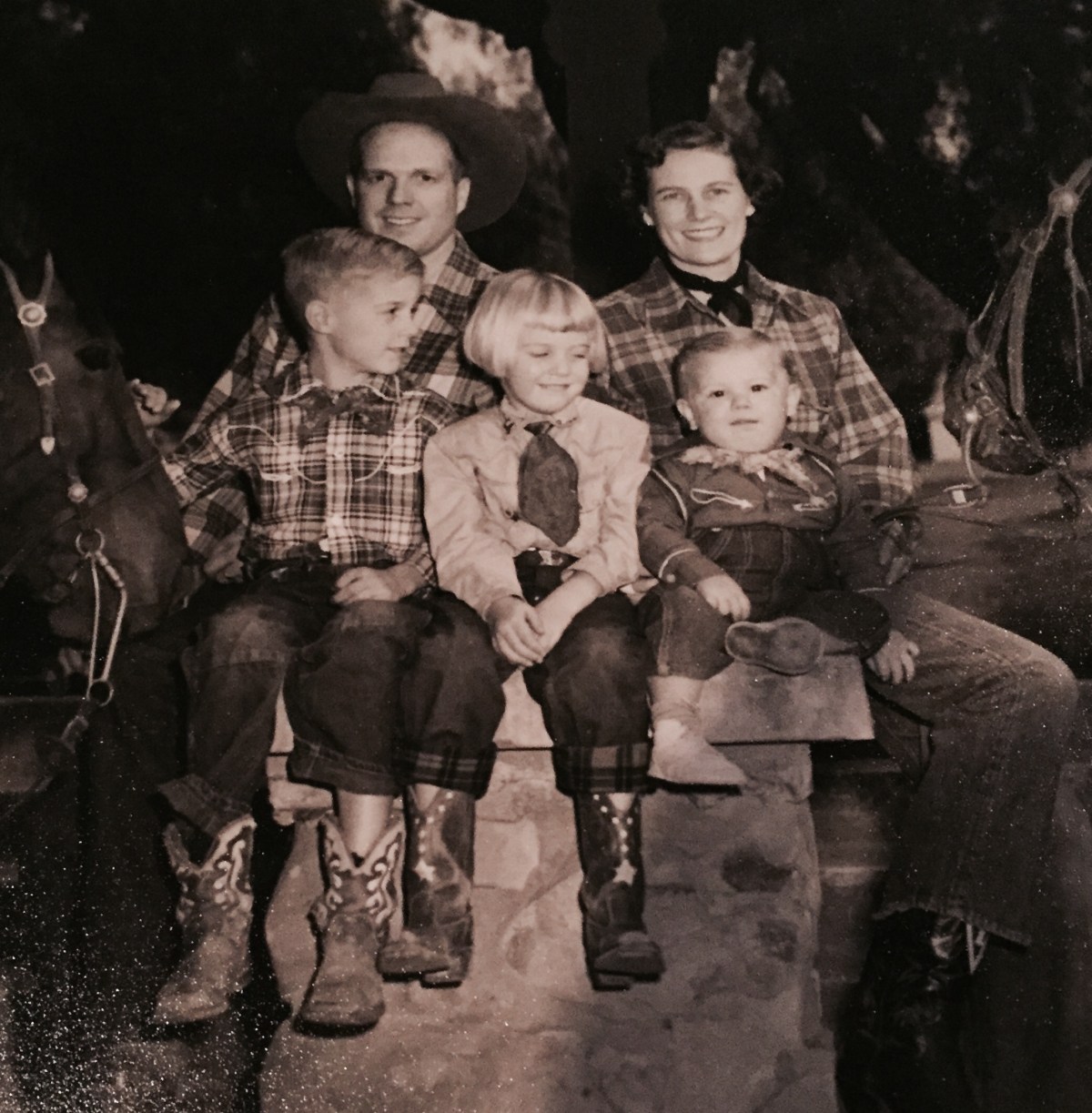
Margaret Noble Appenzeller Huyler was born April 23, 1919 in Korea. She died on September 11, 2005 on our ranch in Jackson Hole, Wyoming. As my beloved mother, she was my first and foremost mentor, the one who, along with Dad, taught me the most basic and long-lasting lessons about right and wrong, treating people with respect and integrity, the value of hard work, honesty, family (heritage and present). A woman of unfailing grace and beauty, she was a quiet but recognized and respected force.

Mom had a wicked sense of humor. Dad could never understand how she and I would get uncontrollable giggles in church or other venues where we were supposed to be serious. The kind of giggles that, perhaps, one shares at that depth only with family. We would laugh so hard the pew would shake. When one of was managing to control herself, the other would set off, silently shaking and initiating another paroxysm of mirth, while Dad looked on disapprovingly.

Mom was a remarkable athlete. Had she been of another era, she likely would have won a full track scholarship to UC Berkeley, where she graduated in 1940, a year ahead of herself. Given that she grew up as the daughter and granddaughter of Methodist missionaries in Korea and graduated in a senior class of five, she had to have been a pretty smart cookie.

Two favorite memories underscore her athleticism and perseverance. When I was about five, we were at the Teton County Fair and Rodeo, where Dad was the announcer. Mom, my brothers, and I were seated in the stands when he announced a 100-yard dash for women and egged Mom to participate. (She was reluctant only because she would have to run in her socks and had a hole in one.) So Mom pulled off her boots and lined up along with fifteen or twenty other competitors, two of whom were Olympic skiers and probably ten years younger than she. Despite the fact that one of the linesman tried to trip her, she won the race – much to the indignation of one of the skiers.

The second, on-going claim to fame was that Mom and Dad were undefeated in the horseback version of the traditional sack race at The Thacher School. The event consisted of partners on separate horses racing 100 yards, piling off their steeds, each inserting one leg in a gunny sack, and running back to the starting line, leading their horses. Mom and Dad worked in perfect synchrony and were beautiful to behold, outstripping all challengers (mostly fit high school boys).

Perhaps these recollections serve as odd examples of what I learned from my mother, but they are significant, and they are what are on my mind on this 13th anniversary of her death. Mom never said no to a challenge. She held her own in any situation with exceptional grace and character. While her life was traditional in many ways, she was also a constant reminder of what women could do – and were not “allowed” to do.  I imagine that all of us make choices and do things in ways that consciously reflect our parents and other loved ones. The Big Things are important: the ways we choose to live and treat people. The Little Things are the ones that inspire memories and are good for the soul. For me – for Mom – they include picking a wildflower and putting it in my hat when I am riding or hiking, setting a nice table, sharing kitchen space, laughing with my daughters, holding my granddaughter, creating a great salad, giggling uncontrollably when I should be straight-faced.

Mom was diagnosed with Parkinson’s seven years before she died. Her last couple of years were a particular challenge for someone who had been so physically capable. At one point not too long before she died, she needed help buttoning her cuffs. She remarked, as I did so, “Oh, Rufis, you make it look so easy.” She never complained, and that single comment struck me deeply in terms of how she dealt with her losses internally.

Here’s to you, Mom. May you be laughing, running, riding with flowers in your hat. Thank you for being my north star.

“One Ambition”

A few weeks ago a childhood friend invited me to join a book group started by her mother and mine in about 1985. Neither of our mothers nor their original book group “sisters,” all mothers-by-extension to the two of us, survives today, but their spirits remain vibrantly alive in the group. It is a special joy to be included in this collection of thoughtful, feisty, got-your-back women.

The invitation for my first gathering, however, was initially a bit daunting. Instead of reading a book, each of us was to select a poem that was meaningful and bring it to be read aloud. Unless I consider selections from Winnie the Pooh and Christopher Robin or songs (poems in their own right) or that which I memorized in 5thgrade (“Daniel Boone, at twenty-one, came with his tomahawk, knife, and gun…”), I am hard-pressed to name a meaningful poem. Too much damage done by teachers of English who, in my opinion, made me analyze poems to death. What to do?

I turned to Garrison Keillor, The Writer’s Almanac, and Googled archives, of course, scrolling backwards from Almanac’slast airing. And there I found it, the perfect poem: “One Ambition”, by Paul Hostovsky, on August 9, 2017. I read it to book group, received an appreciative response, and was inspired to write a bit of a fan letter to the poet. To my happy surprise, he responded quickly, sent me the volume of his poetry that includes “One Ambition,” (entitled Is That What That Is, which I strongly recommend), and gave me permission to include his poem in this blog. Before I do so, let me digress…

When I was about thirteen, I decided to teach myself how to whistle using four fingers (two on each hand). My visionary goal was (still is) to be able to hail a taxi with said whistle when I am eighty and in New York City. One might wonder why a young teenager in a small Southern California town came up with such aspiration. I don’t actually remember that part.

It took long hours of practice, experimentation, and determination to develop the whistle that has served me so well for over fifty years. As a teacher, I could summon my class from recess with one, shrill beckon. My students knew the deal: I would give them the longest amount of play time possible, but there was no mistaking what was my call. Once, on a weekend field trip to the Congressional Cemetery in Washington, DC, I realized that I had not determined a departure point or hour. Inquiring parent chaperones were wondering how we would gather their scattered offspring. Shrugging, I put fingers to mouth, whistled one long summons, and they all ambled back remarkably promptly, much to their parents’ surprise (and my internal delight). Former students have told me they always knew I was in the audience and could hear my “applause,” whether they were on stage or competing in some sports venue. There are simply times when a distinctive whistle is that for which an occasion calls. People are often surprised when it is me who produces one. I get a kick out of that. And I still plan to hail that taxi at eighty, an age that is surprisingly close!

Here is Paul Hostovsky’s marvelous “One Ambition.” It speaks to my heart – and my sense of humor. Equally important, Mr. Hostovsky has inspired me to start reading poetry, for which I am grateful.

All I ever really wanted

Was to whistle with my fingers –


I knew I would never

be the one up on stage


blowing everybody away

with beauty, brilliance, virtuosity…


But to be the lightning

inside the thunderous applause,


to have the audacity

and the manual dexterity


to make a siren screeching

through a dark auditorium,


to be the killer hawk

in all that parroting, pattering rain,


to be, finally, the very best at praise –

now that was something


I thought that if I gave my life to

I might attain.


(FutureCycle Press, 2017)

Roots and Wings

Roots and Wings

‘T’is the season for children everywhere to enroll in colleges and universities, boarding schools and “gap years.” While parents have contended for years that this is their goal, the actual leave- taking frequently is more complicated than we imagined when our children were 13 and we said we could hardly wait until they left…

There was never any doubt that our parents loved my two brother and me, though they were strict task masters. Some folks confuse the two: love and expectations. For Jack and Margaret Huyler, the notion of being their children’s “best friends” never crossed their minds, I am sure. We entered the realm of friendship when we were adults – and, still, they were our parents. My husband and I tried to do the same with our daughters, who are now graceful, responsible, confident adults. They are our equals in every way, and the bonds between us are very close. We remain their parents, a relationship that we share with no one else. Perhaps it was that bond that allowed me to give them the wings to fly when it was time to leave for (daughter #1) gap year then college and (daughter #2), boarding school then college.

It is never easy to say goodbye to our children. We worry about them in ways of which they shouldn’t be aware. One of the most impactful moments of my life was when my older brother left for college. John is three years older than I. He was born two months premature during World War II, when our father was serving in the US Army in China. When John arrived, Mom couldn’t be certain her son would survive or her husband would live to see him if he did. It was not surprising that the two of them formed a very special bond. Actually, Mom had special bonds with each of us. She never favored one over the other; we simply related differently, as one does with one’s offspring.

John matriculated at Princeton University in September of 1963. No one went with him. He boarded a plane in Jackson, Wyoming, while the rest of us gathered at the fence on the tarmac to wave him off. As far as I was aware, Mom and Dad were thrilled for him. The message I received at the same time, probably unspoken, was that it would be my turn next.  At the top of the stairs, John turned for one last wave. Grinning broadly, for some reason I turned to look at Mom, who was waving and smiling in return – while tears rolled down her cheeks. John could not see them. She would not have wanted him to. Even at 15 I recognized she was giving him a gift by keeping her sorrow to herself.

Yes, it was hard to let go of Hillary and Allison. Were it not, that would have been a reflection of something significantly missing. They knew – they know – that I loved them then and love them now. Whatever fears I had on their behalf, I hope I was able to keep to myself. I wanted them to trust in their capabilities and future, not be dependent on us. As my parents did with my brothers and me, I believe that they left imbued with the confidence that they were capable, that their roots were strong and their wings unfolding.

Glass Half Full – Endings and Beginnings

I was never going to be a teacher. My father was a teacher. I knew at an early age what was involved in being a good teacher. Plus, as already noted, my father was a teacher… July 1stmarked my retirement from 46 years as an educator: teacher, administrator, consultant. I could not have asked for a better, more fulfilling career.

Our culture does not, as a whole, respect or appreciate teachers as they deserve, and, frankly, that ignorance plays out in ways that too many people never stop to consider. I vividly recall a conversation with an international demographer whom I was to introduce at a major conference. When I wondered aloud what the impact on prison populations might be if all children in the United States (and their parents) had access to early childhood education, the thought had never occurred to him. To his credit, he responded with thoughtful surprise. But this man, who had studied national demographic trends for several decades, had never even considered an educational perspective.

Good teachers impact the lives of thousands of children over time. They make a difference in the ways young people learn to look at others and themselves. They teach children to think and communicate thoughtfully and critically, how to discern news that is fake from that which is real. Good teachers consistently and supportively insist that students be their best selves. They recognize and celebrate the uniqueness of each child and work extremely hard to develop the strengths and interests and ameliorate the weaknesses. Classrooms are microcosms of the societies around them. They should stress personal and group responsibility.

The teachers who create those positive, interactive environments benefit their charges at the moment and far into the future. I am constantly amazed when students I taught long ago share the impact that some experience had on them. Sometimes it was a specific lesson plan. Much more often, their memories center on bigger, ongoing conversations. They recall when a classmate’s father died unexpectedly and how we talked about it as a class, while their own parents didn’t know what to say. Neither did I, frankly, but when kids ask, teachers must respond. Former students refer to simulation exercises during which they were exposed to exclusion and its impact on everyone in the class. They laughingly remember learning how to diagram sentences, wondering how such drudgery (or delight, as some of them experienced it) would ever help them in life – then discovering the huge advantage they had when learning a foreign language or that their English grammar and writing skills were so much more advanced than their peers’ who had no clue about a participial phrase.

My classroom was my work, my playground, my joy, my challenge, my fulfillment. Hundreds of thousands of teachers around the country are assiduously planning for the school year ahead and the children for whom they will deeply care. The most significant way to help them is to give them our trust, support, and gratitude.

Out of the Mouths…

We who teach quickly recognize that the greatest lessons in our classrooms frequently originate with our students. The most creative lesson plans can’t hold a candle to the insightful observations of young people.

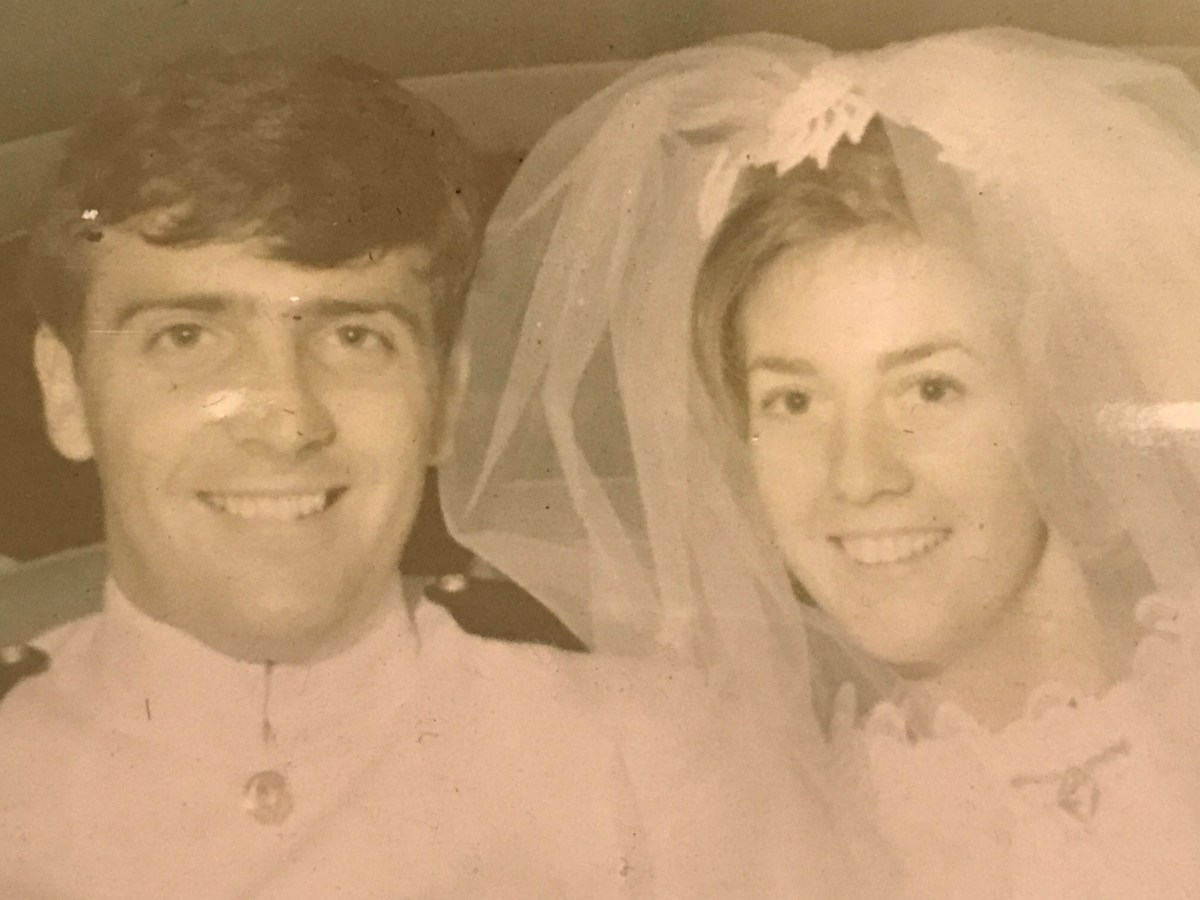
Schools provide opportunities to form friendships with a wide variety of others. Teachers have never made much money in the United States. It is the wont of those who could use more to share with those who have less. Our combined salary in 1972 was $8,000: $6,000 for my full-time teacher husband and $2,000 for part- time me. We had one daughter and (surprisingly) a mortgage for which we were entirely responsible. Wayne’s four years in the Navy afforded us a VA loan, meaning we did not have to put anything down on a house. The bank said our limit was $20,000. Our first house came in at $19,900 for two bedrooms, living and family rooms, front and back yards.

Our Tucson/GreenFields School teacher friends were in similar boats. We shared potluck dinners, babysitting, and vacations. Our second daughter’s godparents are folks with whom we worked then and remain close now. We were all in our 20’s, worked very hard to keep our heads above water, and were content.

The most difficult thing for me about moving from Arizona to Colorado was leaving those friends. Four years in Denver provided new friends and experiences and a wonderful school family at Colorado Academy. Again, leaving was hard.  we transitioned  to Maryland in 1979, I drove our two daughters (4 and 7 at the time) in our volkswagen camper for four straight days, as Wayne had flown on ahead. The first day I could not stop crying; the second day I wouldn’t let myself; by the time we reached Bethesda, I was just glad to have arrived.

I found myself starting all over at Norwood School, this time teaching 5th grade. My assumption that it would take me awhile to learn to like early middle school was smashed the very first day. Young Bobby Weiman (now a lower school head) shook my hand with surprising firmness, looked me in the eye, and welcomed me to my new school home. The rest of his class were similarly receptive and delightful. When they moved to 6th grade, so did I. And while I have learned invaluable lessons from and enjoyed every class I have taught over the years, it was this particular group of youngsters who taught me the most. I am fortunate to remain in touch with many of them.

At one point in my first year, I mentioned Tucson, and one of the students voiced his understanding that I had come from Denver. Yes, but before that… I could see in the eyes of several of the students, those who had known only one school and home, that this was shocking news. Prepared to explain my background, that need was rendered unnecessary by Mark Knepshield, who thoughtfully observed, “Wow! You must have a lot of friends!” And so I do.

More Firsts

Having envisioned working my way through the nine schools in which I have worked, I find myself, instead, recalling opening days and weeks at a couple of other schools. The start of any school tenure usually portends the experiences to come.

We moved from Tucson to Denver in 1975, then to Bethesda, MD, in 1979. Having taught junior kindergarten and kindergarten for four years, I was looking for a slightly older class. I loved my years with the young ones and learned incredible lessons that have served me ever since, however, I do not have the endless patience and talents that are the hallmarks of early childhood teachers. Those who claim that one is not “intellectual” unless one teaches high school or college could not be more wrong. It takes a particular brilliance to match the quick wits and pace of learning evidenced by small fry. Just because they cannot read yet does not mean that they are not wise. Brains develop at an astonishing rate during the early years. It takes real gifts to match those of PreK and K kiddos. And patience, of which I had a limited amount.

I figured that finding a position somewhere in 1st-3rd would be ideal. I wasn’t interested in returning to high school, and middle school definitely was not appealing. Like many, my experience with middle school students was limited, and the reasons not to work with that age abounded. Or so I thought. Life in schools is full of surprises, and I found myself in a drop in interview with Tom Hudnut at Norwood School in Bethesda, Maryland. As we chatted about this and that, Tom surprised me by offering me a position as a 5th grade teacher. In a strange turn of events, I found myself telling him I was not the person for the job, and Tom kept insisting that I was. I have no idea what he saw in me, but his insight was spot on.

Having accepted the position, I figured that it would take time for me to adjust to working with early adolescents (“transescents,” a term I love and rarely see). Instead, I was hooked on day one, when young Bobby Weiman walked up to me, looked me in the eye, extended a firm handshake and warm smile, and welcomed me to 5th grade. Teachers learn from all of their classes and students, some more than others. The huge blessing of our move from Denver to Bethesda was that particular class, with whom I spent two years, when I moved up to 6th grade with them. They were — and remain — a dream class. More about them later. Bob is now Head of Lower School at St. Stephen’s and St. Agnes.

The Very First Year

My plan, as I write in the future, is to include names of folks about whom there is no question that the thoughts are positive and to use first names, only, if I think someone might be offended.

Prior to beginning our first year at Green Fields School, Wayne and I met with the Head of School and two other teachers to plan the traditional first-week outing to Mt. Lemmon. The opening venture always included the entire school (grades 3-12), two or three nights’ camping, and a variety of activities that needed to be scheduled and supervised carefully. Such trips, in any school, are extraordinarily complicated and require multiple levels of support.

In this case, we knew we were going to be joined by a few student leaders, among them a sophomore  named Peter Almquist. From all reports, this fellow was exceptional, and my subconscious, preconceived image of the young knight in question was immediately contradicted when in shambled an unassuming lad with a helmet of very blond hair who sat quietly as we discussed possible plans. We were, after all, in a tiny school. Perhaps comparisons were limited? Was he really so amazing?

He was (and remains) so amazing, as I discovered over the course of the three days when Peter and I sat perched on the edge of a steep rock face and belayed a continuous line of students. One has occasion to discuss a considerable range of topics over the course of three days at the edge of a cliff, and Peter and I got to know each other. While his manner was unassuming, his accomplishments and interests were impressive. Most noteworthy, however, was his selflessness. As the teacher responsible for the culmination of a climbing venture that included all of the students in the school, my task was set. Peter could have elected to hand off his assignment to others. He did not. While we were occasionally assisted by other high school students for an hour or so at a time, all of them ultimately took off. Peter kept me company the entire time and consistently supported his school mates in their efforts. He never appeared tired or bored. His sense of humor and verbal repartee never flagged. Forty-six years later, I can still remember and appreciate his positive presence.

At the end of the third day, I ordered Peter to climb, knowing that he was both practiced and passionate about the sport. I had him on pretty loose belay, respecting his capabilities and the relatively minor challenge of that particular cliff for someone of his caliber. However, just as his face appeared in front of me, the outcropping in his right hand broke free, and he flew backwards with a total look of surprise that undoubtedly mirrored mine.  “See? It’s easy for Mrs. Glass to hold Peter, even though he is much bigger than she is,” loudly observed the teacher waiting with students at the bottom. I never let on that Peter’s fall left a rope burn about 4″ long across my back. No more loose belays!

Educators in the trenches frequently sustain rope burns, literal and metaphysical, from unexpected turns of events. Usually, they say nothing. Over the years I have often wished that parents were a bit more sensitive to the considerable sacrifices good teachers make on behalf of their children every day.

Peter is now a Senior Intelligence Analyst at the Bureau of Intelligence and Research, a branch of the State Department in Washington, DC. He earned his undergraduate degree from Pomona and his PhD from MIT. He lives in Virginia with his wife and two grown sons. Not surprisingly, Wayne and I have kept in fairly close contact with Peter and Marty over the years. Peter is now more than twice the age I was when he and I first got to know each other on Mt. Lemmon in 1972. It will surprise no one who teaches that he continues to exhibit the same strength of character now that he did then.